WELCOME TO MY BLOG, MY FRIEND!

Tuesday, December 22, 2015

Brown's Daily Word 12-22-15

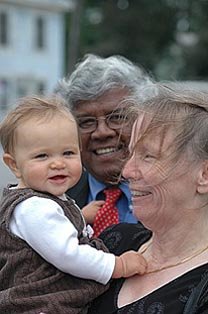
Merry Christmas to you, all our family and friends around the corner and around the globe with whom we are linked through grace and love of Jesus.  It is going to be the warmest Christmas Eve in the Northeast Region of America the beautifulWe spent a few days in Boston last weekend with our grandchildren and with their parents.  It was a  treat.  We treasure the times and moments we get to share and celebrate with our grandchildren.  We will be spending Christmas Eve with our church family in worship and celebration. The worship service on Christmas Eve will be held at 6:30 PM.  We are spending Christmas day with our family.  Thank you all for your love and affection that you have embodied in the forms of gifts and many other blessings. Thank you for all the love shared with us over the years.      
 

    I will not posting any blogs for next few days.  I will be busy playing with our grandchildren.


    In C.S. Lewis' book The Lion, The Witch and the Wardrobe, Lewis takes us to the land of Narnia.  When Narnia is living under the authority of the witch, it is "always winter, but never Christmas." Can you imagine how discouraging that would be to a child?  Still, there are people today who are living in a winter, and Christmas never comes to them.  What joy could be theirs if only they would allow Christmas to come to their hearts!


    Every year at the Metropolitan Museum of Art in New York, there is displayed, beneath the great Christmas tree, a beautiful 18th century Neapolitan nativity scene.  In many ways it is a very familiar scene.  The usual characters are all there: shepherds roused from sleep by the voices of angels; the exotic wise men from the East seeking, as Auden once put it, "how to be human now"; Joseph; Mary; and the Baby.  All are there, each figure an artistic marvel of wood, clay, and paint. There is, however, something surprising about this scene, something unexpected here, easily missed by the casual observer.  What is strange here is that the stable, the shepherds and the cradle are set, not in the expected small town of Bethlehem, but among the ruins of mighty Roman columns.  The fragile manger is surrounded by broken and decaying columns.  The artists knew the meaning of this event: The gospel, the birth of God's new age, was also the death of the old world.

    The Herods of the world know in their souls what we perhaps have passed over too lightly: God's presence in the world means finally the end of their own power. They seek not to preserve the birth of God's new age but to crush it.  For Herod, the gospel is news too bad to be endured.  For Mary, Joseph and all the other characters it is news too good to miss.


    “Christmas is built upon a beautiful and intentional paradox; that the birth of the homeless should be celebrated in every home.” 
― G.K. Chesterton,


    "I have always thought of Christmas time, when it has come round -- apart from the veneration due to its sacred name and origin, if anything belonging to it can be apart from that -- as a good time: a kind, forgiving, charitable, pleasant time: the only time I know of, in the long calendar of the year, when men and women seem by one consent to open their shut-up hearts freely, and to think of people below them as if they really were fellow-passengers to the grave, and not another race of creatures bound on their journeys."  CHARLES DICKENS, A Christmas Carol


        "To an open house in the evening Home shall men come,
        To an older place than Eden And a taller town than Rome.
        To the end of the way of the wandering star,

        To the things that cannot be and that are,

        To the place where God was homeless"  G. K. Chesterton


Pastor Brown

Friday, December 18, 2015

Brown's Daily Word 12/18/15

   Hallelujah what a Savior that was born on that glorious first Christmas to save us, to deliver us from our sin and bondage.  Here we are, just a week away form Christmas day.  May Jesus the Christ of Christmas quiet our hearts and still our souls as we prepare to celebrate His birth.  May He shine on us with His glory.  May He make all "the rough places plain" in our lives and in our homes.
    In The Lion, the Witch and the Wardrobe, the character Edmund Pevensie personifies gluttony, the sin of excessively using things, normally associated with the appetite, and, in effect, making one's belly the god he serves (Phil. 3:19).  This is just one of the sinful areas in his life.  Jadis, the White Witch, exploits Edmund's weaknesses when she meets him in a snowy wood, offering him a warm drink and Turkish Delight, his favorite candy.  From the first bite, he is hooked, for each "piece was sweet and light to the very center and Edmund had never tasted anything more delicious."  As she pumps him for information regarding his brother and sisters, he readily replies, driven by an insatiable hunger for more and more Turkish Delight.  "At first Edmund tried to remember that it is rude to speak with one's mouth full, but soon he forgot about this and thought only of trying to shovel down as much Turkish Delight as he could, and the more he ate, the more he wanted to eat, and he never asked himself why the Queen should be so inquisitive" (p.32)….

    Edmund's gluttonous desire has deadly ramifications…. While Edmund is saved by the intervention and intercession of Aslan, (the Christ figure in the story)  the cost is deadly to the latter.  Lewis' point in emphasizing Edmund's gluttony, (one of the seven deadly sins), is to illustrate vividly the effects of sins in general and this sin in particular; over-indulgence blinds us to the truth, turning us inward, making us slaves to our own insatiable desires.

    May the newborn King make us generous in giving, passionate in worship, zealous in service, and radical in our hospitality.  We are so blessed and privileged to celebrate His birth once again.  He emptied Himself and came that we might be full; He became a servant to make us a royal priesthood. 

    This comes to you with our deep love and gratitude to all of you for your love and affection over the years.  Let us once again join our hearts and minds to sing glorious carols and triumphant hymns, so that Satan might tremble and flee away, and the world might know once again that the Savior reigns. Amen and Amen.

 In Jesus our Lord.

  Brown

Thursday, December 17, 2015

Brown's Daily Word 12/17/15

The sounds and sights of the Christmas Season surround us.  It would be impossible to miss them (even if you wanted to).  This morning we were watching a musical celebration of Christmas in Germany and Austria, hosted by Dianne Bish, who was formerly the organist for D. James Kennedy's church for many years.  What a thrill to watch children carry their lanterns to view a historic nativity scene and be a part of Christmas.

    It is impossible to miss the supernatural element in the birth of Jesus.  Angels pop up all over the Christmas story.  An angel told Mary she would give birth to Jesus, who was to "save his people from their sins".  An angel told Joseph to call the baby's name Jesus. An angel warned Mary and Joseph to flee to Egypt.  An angel told them when it was safe to return to Israel, an angel announced the birth of Christ to the shepherds, and then the angelic choir serenaded them.


    Angels certainly were a supernatural presence multiple times in the Christmas story, but the mysteries went further.  There was also the mysterious star that led the Magi from some distant land all the way to Bethlehem to the very house where they found the baby Jesus. Also, the Magi were warned in a dream not to return to Herod but to go home another way.  Angels, stars, and dreams with their accompanying mystery, awe, and wonder would lead us to say that at the first Christmas the Supernatural was everywhere.  We believe in something absolutely amazing.  It seems at times that we have heard these things so often that we have forgotten how astounding they are.  


    As Christians we believe that this world that we inhabit is not the “real” world. This is just the “temporary” world. This ball of earth we call home will not last forever.  We believe this world is temporary; only God is eternal.  We believe there is “another world” that is the “real” world.  It’s the world of God and of the angels, of Christ and the Holy Spirit, of heaven and the saints who dwell in glory.  These two worlds exist side by side.  We live in one world but we believe in another world.  Or to use a New Testament word picture, we live in this world but our citizenship is in another world.  That’s why the Bible calls us “aliens” and “strangers” on the earth.  We are pilgrims on a journey from this world that is passing away to a world that will last forever.  We are looking for a city with eternal foundations, whose builder and maker is God.


    The world you see around you will not last forever.“ The world is passing away, along with its desires, but whoever does the will of God abides forever” (I John 2:17 ESV).  Nothing golden lasts.  We are here today, gone tomorrow.  Heaven and earth will pass away but the Word of the Lord will stand forever.  The Bible is very specific about how this world will end.  Revelation 16:17-20 speaks of a vast earthquake in the last days that destroys all the cities of the earth.


Everything that man builds collapses before his eyes. So it is with everything that is of this world. Here are some lines from a poem called “Gray’s Elegy” written in a country churchyard in England:


    The boast of heraldry, the pomp of power


    And all that beauty, all that wealth e’er gave


    Awaits alike the inevitable hour


    The paths of glory lead but to the grave.


    It is right at this point that Christmas becomes so important to us.  We are a dying race living on a dying planet.  All that we see around us will someday vanish without a trace.  Despite our best efforts, there is nothing we can do to save ourselves.  If we are to be saved, salvation must come from somewhere else. It must come from outside of us.


    Many miracles surround Christmas—the angels, the star, the dreams, the prophecies, and most of all, the virgin birth, but those miracles are just signs pointing to the greatest miracle of all, that we who live in this world have been visited by Someone from the “other world.”  Someone from the world of light came to the world of darkness.  Someone from the eternal came to the temporary. Someone from heaven came to live with us on earth!


    As Martin Luther put it, “He whom the worlds could not enwrap yonder lies in Mary’s lap.” That’s the Incarnation—it’s the central miracle of the Christian faith.  If we can believe that God visited our planet as a little baby 2,000 years ago, we will have no problem with the rest of what we believe.  Richard Dawkins, the famous atheist, does not believe this because he doesn’t believe there is “another” world. He thinks this world is the only world there is.  He is so wrong.


    I close with the words of Bishop Hillary: “Everything that seems empty is full of the angels of God.”  Sometimes the world around us may seem empty and we may feel entirely alone, but now and then—Suddenly!—when we least expect it—when we’ve almost given up hope—when we’re tired or bored or fearful or disgruntled—God breaks through and the angels start to sing.  They sang for some startled shepherds one night in Bethlehem over 2,000 years ago and they still sing today for those who care to hear them.


    Can you hear the angels singing?  They bring good news from the other side, good news of great joy, the best news the world has ever heard: Joy to the World, the Lord is Come, Let Earth receive her King!

 In Christ,

    Brown