Good morning,
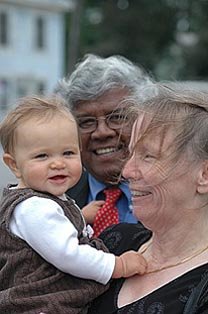
Praise the Lord for the way He lavishes His grace and mercy upon us day by day. Jessica and Tom came home for the long weekend. Sunita and Andy returned back to their home in Washington, DC yesterday after spending their vacation in the state of Oregon. Praise the Lord for this Monday. It is celebrated as the Labor Day in the USA. Praise the Lord for the work the Lord has called us to do on earth with our time and talent.
I did read some time ago that during the middle of the 1800’s there was a popular set of rules for the office that showed up in one form or another across the nation.
1. Office employees will daily sweep the floors, dust the furniture and showcases. Each day they must fill lamps, clean chimneys, & turn wicks
2. Windows must be washed once a week.
3. Each clerk will bring in a bucket of water and a scuttle of coal for the day’s business.
4. Make your pens carefully. You may whittle your nibs to your individual taste.
5. This office will open at 7:00 am and close at 9:00 p.m. daily, except on Sunday, on which day it will remain closed. Each employee is expected to spend Sunday attending church and contributing liberally to the cause of the Lord.
6. Men employees will be given an evening off each week for courting purposes, or 2 evenings a week if they go regularly to church.
7. After an employee has spent 13 hours of labor in the office, he should spend the rest of his time reading the Bible any other good books while contemplating the glories and building up of the kingdom.
8. Every employee should lay aside, from each pay, a goodly sum of his earning, so that he will not become a burden upon the charity of his betters.
9. The employee who has performed his labors faithfully and without fault for a period of 5 years in my service, and who had been thrifty and attentive to his religious duties, is looked upon by his fellowmen as a substantial and law-abiding citizen, will be given an increase of 5 cents per day in his pay providing a just return in profits from the business permits it.
Martin Luther spoke of the "priesthood of all believers", a theological concept that points to the fact that ministry is not just the work of the pastor. Luther reminded the laity (non-clergy) to be "little Christs" to each other. According to Luther, God’s people are to pray for each other. "They are to listen to their sisters’ and brothers’ confessions of sin and cries of distress. They are to speak God’s cheering word of forgiveness and consolation. They are to be agents of God’s overflowing goodness by ministering to the poor and oppressed". In Matthew 5:13-20, we who are Christians are defined as being salt of the earth, light to the world, and a lamp placed on a lamp stand.
First of all, Christians are to be the salt of the earth. We don’t know which aspect of salt Jesus was referring to in this analogy, but think about all the uses of salt. Salt preserves; salt flavors; salt cleanses; salt has value. Salt was even used in the Old Testament covenants made with God. Salt has been so important in the history of the world that it was sometimes used as money. In our dealings with those around us (even in the workplace), we must show compassion, respond to people in need, and be like "little Christs" to one another. Our "saltiness", our "acts of faith" will minister to others. Whether we work in face-to-face customer contact or in data processing behind a desk all day, there are opportunities to do the best job we can, with the best attitude we can, with the greatest amount of integrity we can. When an opportunity arises to be a good listener, to forgive as God forgives, to show compassion as Jesus showed compassion, we can act as the salt we are, listening, forgiving, and showing compassion, as we are able. As Christians we should be preserving, flavoring, cleansing, valuable additions to the world around us, no matter whom we come in contact with.
Christians are to be the light of the world. That is, we are to be the light that points to Jesus, the Light of the world. Light illuminates; light helps us see what’s really there; light allows us to see our way. If we Christians were living as light to the world, we would be illuminating the way for people who are in darkness. We would be telling people how following Jesus has illuminated our lives. We would be sharing our faith because this news is too good to keep to ourselves. The church’s service in the world is carried out through our hands and feet. When we tell someone about Jesus, the Light of the World, we shine a light on their path that could bring them hope, joy, and peace. We are to be little lights that point people to Jesus, the Light of the World.
Christians are lamps, not hidden under a "bushel", but on the lamp stand for all to see. Just as a lamp on a lampstand brings light to the whole house, we are told to let our light shine "so that they may see your good works and give glory to your Father in heaven". Everything we do, we do to the glory of God. It goes beyond our own ability or reputation. What we do reflects on our heavenly Father. The way we carry out our jobs can give glory to God or cause God pain. Our faith can not be removed from our daily work. We cannot compartmentalize our faith into Sunday behaviors and Monday behaviors. The different roles in our life cannot be dissected apart and parceled into this arena or that. Our work is, in a sense, a prayer to God. Hopefully, our work is meaningful and helps to accomplish God’s mission.
Brother Lawrence, a French monk who lived from 1611 to 1691, might be considered to have archaic ideas, with very little to say to today’s working people. However, he had some great insights into our theme of ministry in daily life. Brother Lawrence (The Practice of the Presence of God, pg. 81) wrote: "It is not necessary to have great things to do. I turn my little omelette in the pan for the love of God; when it is finished, if I have nothing to do, I prostrate myself on the ground and adore my God, who gave me the grace to make it, after which I arise, more content than a king. When I cannot do anything else, it is enough for me to have lifted a straw from the earth for the love of God. People seek for methods of learning to love God. They hope to arrive at it by I know not how many different practices; they take much trouble to remain in the presence of God in a quantity of ways. Is it not much shorter and more direct to do everything for the love of God, to make use of all the labors of one’s state in life to show Him that love, and to maintain His presence within us by this communion of our hearts with His? There is no finesse about it; one has only to do it generously and simply."
May God’s glory shine through you as we seek to minister to all those who we see daily so that they may see our good works and glorify our Father who is in heaven.
In Christ,
Brown
http://www.youtube.com/watch?v=4d9RJMOP9Tw
Monday, September 6, 2010

Thursday, September 2, 2010
Brown's Daily Word 9-2-10
Good morning,
Praise the Lord for another glorious day in the Kingdom of Lord and Savior, Jesus Christ. The Lord blessed us with beautiful mid-week study and fellowship yesterday evening. We looked at Mathew 14, " Sensing the presence of Jesus in the midst of the storm".
A preacher tells a story entitled "Enough is Enough". The central figure of the story is a person who accepted everything that happens as manifestations of divine power. He said, "It is not for me to question the workings of divine providence." All his life, misfortune had been his. Yet never once did he complain. He got married and his wife ran away with the hired man. His daughter was deceived by a villain. His son was lynched. A fire burned down his barn. A cyclone blew away his home. A hail storm destroyed his crops, and the banker foreclosed on his mortgage, taking his farm. Yet, at each stroke of misfortune, he knelt and gave thanks to God Almighty for his unchangeable mercy. After a time, penniless but still submissive to God, he landed in the county poorhouse. One day the overseer sent him out to plow a potato field. A thunderstorm was passing over when, without warning, a bolt of lightning descended from the sky. It melted the plowshare, stripped most of his clothing from him, singed off his beard, branded his naked back with the initials of a neighboring cattleman, and hurled him through a barbed wire fence. When he recovered consciousness, he got up slowly on his knees, clasped his hands, raised his eye toward heaven and, then, for the first time in his life, asserted himself and said, "Lord, this is getting plumb ridiculous."
Have you been there? Haven’t we all, at one time or another, felt that we had more than our fair share? Every one of us has dreams blown away. Every once in a while we back up and say, "Why am I being hit with this storm of life?" Sometimes these storms are caused by the devil, sometimes by other people, and sometimes by us. Sometimes they’re allowed by the Lord. They come from different sources, but they do have a purpose in our life.
Matthew 14, beginning with verse 22, "Right away Jesus made his disciples get into a boat and start back across the lake, but he stayed until he had sent the crowds away. Then he went up on a mountain where he could be alone and pray. Later that evening he was still there. By this time the boat was a long way from the shore. It was going against the wind and was being tossed around by the waves. A little while before morning, Jesus came walking on the water toward his disciples and when they saw him, they thought he was a ghost and they were terrified and started screaming. At once Jesus said to them, "Don’t worry, I am Jesus. Don’t be afraid." Peter replied, "Lord, if it is really you, tell me to come to you on the water." "Come on," Jesus said.
Peter then got out of the boat and started walking on the water toward him, but when Peter saw how strong the wind was, he was afraid and started sinking. "Lord, save me!," he shouted. Right away Jesus reached out his hand. He helped Peter up and said, "You surely don’t have much faith. Why do you doubt?" When Jesus and Peter got into the boat, the wind died down. The men in the boat worshiped Jesus and said, "You really are the Son of God."
Some storms in our lives come because we are out of God’s will. An example of that, of course, is Jonah, who deliberately disobeyed God’s will according to the Bible. God sent a great wind when he was out on the boat. Another perfect example is in Acts 5, as Ananias and Sapphira deliberately lied to God and the Church concerning their giving, and they lost their lives. Perhaps the storm you encounter today could be caused by some disobedience.
Some storms, however, come because we are in God’s will. A storm in your life does not mean necessarily that you are out of the will of the Lord or willfully disobeying him. In fact, there are beautiful examples in the story in Matthew. "Right away, Jesus made his disciples get into a boat and start back across the lake. . .He prevailed upon his disciples to get into the boat." In other words, the disciples found themselves out in the middle of a lake in the midst of a terrible storm. They were fishermen, yet they were still afraid. It had to be a bad storm.
Ironically they were out in the midst of the storm because Jesus told them to get in the boat and go out in the middle of the lake. They were right in the middle of God’s will but having the storm of their lives.
Job, of course, is another perfect example of facing extreme trials while living in the center of God's will. We know that when Satan came to God concerning what was happening on earth, that God challenged him and said, "Look at Job; he’s a perfect man." We know all about the boils head to toe on Job as he sat on an ash heap. Had he sinned against God. The Scriptures record that he was faithful beyond all men. He was a godly man in God’s sight and yet he was going through Yet, we see that Joseph was sold into slavery and taken into Egypt where he spent years in prison after being slandered by the wife of Potiphar, his owner. Joseph, though in a very difficult time of his life, was in the center of God’s will.
The Apostle Paul is a another example. Paul, who has gone through a shipwreck, was beaten. Paul eventually died a martyr’s death though he was a man of God, one of the great men in the history of the Christian church. He was in the center of God’s will. It is possible for any of us to be obedient to God, walking in the light, living in the center of God’s will, and yet at the same time encounter a terrific storm.
There are many wonderful people who really do love God and who really do obey Him yet, because of life’s uncertainties and the sin of the earth, life gives them a tough blow. When we encounter such a difficult time we need our feet on the ground and understand that storms happen even to people in the will of God. During the storms of life, God is not distant or aloof, but He enters into our storm and walks with us through it. Look at verse 25, "A little while before morning, Jesus came walking on the water toward his disciples." Jesus came to them at their darkest hour and he will do the same thing for us.
The Bible says it was 3 AM when Jesus came. We know that the darkest hour of the night is right before the dawn, a little while right before the morning. There is a hymn "Just When I Need Him, Jesus Is Near. Just when I falter, just when I fear. Ready to help me, ready to cheer. Just when I need Him most." He walks into the storms of life at our darkest hour, when we are the most needy. He saw everything the disciples encountered and knew exactly where they where. He saw their fears and He heard their cries, But He did not come to them until the hour was the darkest.
He comes to give victory over our greatest fears. He came to the disciples, walking on the very thing that frightened them. They worried about the waves as the boat tossed back and forth. They were afraid that they were going to drown or that the boat would capsize. They looked at those high waves coming over the sides of that boat, bailing water as fast as they can. These fishermen, though they had been on the water all their life, were scared to death. The waves came on and on yet, suddenly, he came walking to them on the very thing that brought fear to their hearts. He had conquered the wind and the waves.
In His quiet, majestic way, as walked on the water, it was as if Jesus was saying, "Guys, the thing that is the greatest storm in your life, I keep under my feet." If you are sick, He comes walking on your sickness. If you are afraid of death, He comes walking on the waves of death, as He did on Easter. "Oh, death where is thy sting? Oh, grave where is thy victory?" He still comes walking. All is well.
In Him,
Brown
.
http://www.youtube.com/watch?v=T8_EfDqF7YI
Praise the Lord for another glorious day in the Kingdom of Lord and Savior, Jesus Christ. The Lord blessed us with beautiful mid-week study and fellowship yesterday evening. We looked at Mathew 14, " Sensing the presence of Jesus in the midst of the storm".
A preacher tells a story entitled "Enough is Enough". The central figure of the story is a person who accepted everything that happens as manifestations of divine power. He said, "It is not for me to question the workings of divine providence." All his life, misfortune had been his. Yet never once did he complain. He got married and his wife ran away with the hired man. His daughter was deceived by a villain. His son was lynched. A fire burned down his barn. A cyclone blew away his home. A hail storm destroyed his crops, and the banker foreclosed on his mortgage, taking his farm. Yet, at each stroke of misfortune, he knelt and gave thanks to God Almighty for his unchangeable mercy. After a time, penniless but still submissive to God, he landed in the county poorhouse. One day the overseer sent him out to plow a potato field. A thunderstorm was passing over when, without warning, a bolt of lightning descended from the sky. It melted the plowshare, stripped most of his clothing from him, singed off his beard, branded his naked back with the initials of a neighboring cattleman, and hurled him through a barbed wire fence. When he recovered consciousness, he got up slowly on his knees, clasped his hands, raised his eye toward heaven and, then, for the first time in his life, asserted himself and said, "Lord, this is getting plumb ridiculous."
Have you been there? Haven’t we all, at one time or another, felt that we had more than our fair share? Every one of us has dreams blown away. Every once in a while we back up and say, "Why am I being hit with this storm of life?" Sometimes these storms are caused by the devil, sometimes by other people, and sometimes by us. Sometimes they’re allowed by the Lord. They come from different sources, but they do have a purpose in our life.
Matthew 14, beginning with verse 22, "Right away Jesus made his disciples get into a boat and start back across the lake, but he stayed until he had sent the crowds away. Then he went up on a mountain where he could be alone and pray. Later that evening he was still there. By this time the boat was a long way from the shore. It was going against the wind and was being tossed around by the waves. A little while before morning, Jesus came walking on the water toward his disciples and when they saw him, they thought he was a ghost and they were terrified and started screaming. At once Jesus said to them, "Don’t worry, I am Jesus. Don’t be afraid." Peter replied, "Lord, if it is really you, tell me to come to you on the water." "Come on," Jesus said.
Peter then got out of the boat and started walking on the water toward him, but when Peter saw how strong the wind was, he was afraid and started sinking. "Lord, save me!," he shouted. Right away Jesus reached out his hand. He helped Peter up and said, "You surely don’t have much faith. Why do you doubt?" When Jesus and Peter got into the boat, the wind died down. The men in the boat worshiped Jesus and said, "You really are the Son of God."
Some storms in our lives come because we are out of God’s will. An example of that, of course, is Jonah, who deliberately disobeyed God’s will according to the Bible. God sent a great wind when he was out on the boat. Another perfect example is in Acts 5, as Ananias and Sapphira deliberately lied to God and the Church concerning their giving, and they lost their lives. Perhaps the storm you encounter today could be caused by some disobedience.
Some storms, however, come because we are in God’s will. A storm in your life does not mean necessarily that you are out of the will of the Lord or willfully disobeying him. In fact, there are beautiful examples in the story in Matthew. "Right away, Jesus made his disciples get into a boat and start back across the lake. . .He prevailed upon his disciples to get into the boat." In other words, the disciples found themselves out in the middle of a lake in the midst of a terrible storm. They were fishermen, yet they were still afraid. It had to be a bad storm.
Ironically they were out in the midst of the storm because Jesus told them to get in the boat and go out in the middle of the lake. They were right in the middle of God’s will but having the storm of their lives.
Job, of course, is another perfect example of facing extreme trials while living in the center of God's will. We know that when Satan came to God concerning what was happening on earth, that God challenged him and said, "Look at Job; he’s a perfect man." We know all about the boils head to toe on Job as he sat on an ash heap. Had he sinned against God. The Scriptures record that he was faithful beyond all men. He was a godly man in God’s sight and yet he was going through Yet, we see that Joseph was sold into slavery and taken into Egypt where he spent years in prison after being slandered by the wife of Potiphar, his owner. Joseph, though in a very difficult time of his life, was in the center of God’s will.
The Apostle Paul is a another example. Paul, who has gone through a shipwreck, was beaten. Paul eventually died a martyr’s death though he was a man of God, one of the great men in the history of the Christian church. He was in the center of God’s will. It is possible for any of us to be obedient to God, walking in the light, living in the center of God’s will, and yet at the same time encounter a terrific storm.
There are many wonderful people who really do love God and who really do obey Him yet, because of life’s uncertainties and the sin of the earth, life gives them a tough blow. When we encounter such a difficult time we need our feet on the ground and understand that storms happen even to people in the will of God. During the storms of life, God is not distant or aloof, but He enters into our storm and walks with us through it. Look at verse 25, "A little while before morning, Jesus came walking on the water toward his disciples." Jesus came to them at their darkest hour and he will do the same thing for us.
The Bible says it was 3 AM when Jesus came. We know that the darkest hour of the night is right before the dawn, a little while right before the morning. There is a hymn "Just When I Need Him, Jesus Is Near. Just when I falter, just when I fear. Ready to help me, ready to cheer. Just when I need Him most." He walks into the storms of life at our darkest hour, when we are the most needy. He saw everything the disciples encountered and knew exactly where they where. He saw their fears and He heard their cries, But He did not come to them until the hour was the darkest.
He comes to give victory over our greatest fears. He came to the disciples, walking on the very thing that frightened them. They worried about the waves as the boat tossed back and forth. They were afraid that they were going to drown or that the boat would capsize. They looked at those high waves coming over the sides of that boat, bailing water as fast as they can. These fishermen, though they had been on the water all their life, were scared to death. The waves came on and on yet, suddenly, he came walking to them on the very thing that brought fear to their hearts. He had conquered the wind and the waves.
In His quiet, majestic way, as walked on the water, it was as if Jesus was saying, "Guys, the thing that is the greatest storm in your life, I keep under my feet." If you are sick, He comes walking on your sickness. If you are afraid of death, He comes walking on the waves of death, as He did on Easter. "Oh, death where is thy sting? Oh, grave where is thy victory?" He still comes walking. All is well.
In Him,
Brown
.
http://www.youtube.com/watch?v=T8_EfDqF7YI
Wednesday, September 1, 2010
Brown's Daily Word 9-1-10
Good morning,
Praise the Lord for this Wednesday, the first day of September. Three years ago today it was a gorgeous late summer day as we were getting ready for Sunita and Andy's wedding. It seems like yesterday. It is going to be another hot day here in New York, but it is starting to smell "ripe". Though it is still hot, we can sense Autumn in the air. We can see the some of the colors in the trees are slowly developing, and preparing to pop out. We picked up some New York apples and Pennsylvania peaches the other day. Praise the Lord for summer fruits. Alice is busy making sweet pickles from a bushel of cucumbers (31 quarts). She also canned 1 1/2 bushels of tomatoes, froze a bushel of corn and froze 2 bushels of green beans. Praise the Lord for the fresh vegetables! Praise the Lord for all His rich provisions.
Last weekend Janice, Jeremy, Micah, and Simeon went camping along a stream in New Hampshire. They backpacked 3 miles in from their car to their campsite along the stream. Jeremy carefully tied their gorp, animal crackers, and other food supplies in a "bear sack", that is he put it 11 feet above the ground. Other campers, a little farther from the stream, put up their sacks as well, but many were much closer to the ground and not carefully wrapped. In the morning Janice and Jeremy discovered that a bear had attacked their food supplies - and left all the others alone. Micah commented that it may have been better if they had taken the food into the tent. . . how wrong she was! Praise the Lord for their safety! They "borrowed" some food from other campers and made the trek back to the car that morning.
St. Augustine once said, ”Jesus Christ is not valued at all until he is valued above All”. In other words Jesus must be at the center of our lives. The one thing that we keep going back to as those belong to Jesus, is praising God. Louis Albert Banks tells of an elderly Christian man, a fine singer, who learned that he had cancer of the tongue and that he needed surgery. In the hospital after everything was ready for the operation, the man said to the Dr. Are you sure I will never sing again? The Surgeon found it hard to answer his question. He simply shook his head no. The patient then asked if he could sit up for a moment. "I’ve had many good times singing the Praises of God", he said. "And now you tell me I will never sing again. I have one song that will be my last. It will be of gratitude and praise to God." There in the Dr.’s presence the man sang softly the words of Isaac watt’s hymn,
I’ll praise my Maker while I’ve breath,
And when my voice is lost in death,
Praise shall employ my nobler powers;
My days of praise shall ne’er be past,
While life, and thought, and being last,
Or immortality endures.
Why should I make a man my trust?
Princes must die and turn to dust;
Vain is the help of flesh and blood:
Their breath departs, their pomp, and power,
And thoughts, all vanish in an hour,
Nor can they make their promise good.
Happy the man whose hopes rely
On Israel’s God: He made the sky,
And earth, and seas, with all their train:
His truth for ever stands secure;
He saves th’oppressed, He feeds the poor,
And none shall find His promise vain.
The Lord has eyes to give the blind;
The Lord supports the sinking mind;
He sends the labr’ing conscience peace;
He helps the stranger in distress,
The widow, and the fatherless,
And grants the pris’ner sweet release.
He loves His saints, He knows them well,
But turns the wicked down to hell;
Thy God, O Zion! ever reigns:
Let every tongue, let every age,
In this exalted work engage;
Praise Him in everlasting strains.
I’ll praise Him while He lends me breath,
And when my voice is lost in death,
Praise shall employ my nobler powers;
My days of praise shall ne’er be past,
While life, and thought, and being last,
Or immortality endures.
John Wesley gave out this hymn just be fore preaching for the last time in City Road Chapel, Tuesday evening, Februa ry 22, 1791. The following Monday after noon, though very ill, he amazed the friends at his bedside by singing the hymn throughout in a strong voice. The next night, his biographer, Tyler Mann, tells us, he tried scores of times to repeat the hymn, but could only say “I’ll praise—I’ll praise—.” And with praise for his Maker on his lips and in his heart he passed to that life where “immortality endures.”
In Jesus our Lord,
Brown
http://www.youtube.com/watch?v=j5m48vG2q2E
Praise the Lord for this Wednesday, the first day of September. Three years ago today it was a gorgeous late summer day as we were getting ready for Sunita and Andy's wedding. It seems like yesterday. It is going to be another hot day here in New York, but it is starting to smell "ripe". Though it is still hot, we can sense Autumn in the air. We can see the some of the colors in the trees are slowly developing, and preparing to pop out. We picked up some New York apples and Pennsylvania peaches the other day. Praise the Lord for summer fruits. Alice is busy making sweet pickles from a bushel of cucumbers (31 quarts). She also canned 1 1/2 bushels of tomatoes, froze a bushel of corn and froze 2 bushels of green beans. Praise the Lord for the fresh vegetables! Praise the Lord for all His rich provisions.
Last weekend Janice, Jeremy, Micah, and Simeon went camping along a stream in New Hampshire. They backpacked 3 miles in from their car to their campsite along the stream. Jeremy carefully tied their gorp, animal crackers, and other food supplies in a "bear sack", that is he put it 11 feet above the ground. Other campers, a little farther from the stream, put up their sacks as well, but many were much closer to the ground and not carefully wrapped. In the morning Janice and Jeremy discovered that a bear had attacked their food supplies - and left all the others alone. Micah commented that it may have been better if they had taken the food into the tent. . . how wrong she was! Praise the Lord for their safety! They "borrowed" some food from other campers and made the trek back to the car that morning.
St. Augustine once said, ”Jesus Christ is not valued at all until he is valued above All”. In other words Jesus must be at the center of our lives. The one thing that we keep going back to as those belong to Jesus, is praising God. Louis Albert Banks tells of an elderly Christian man, a fine singer, who learned that he had cancer of the tongue and that he needed surgery. In the hospital after everything was ready for the operation, the man said to the Dr. Are you sure I will never sing again? The Surgeon found it hard to answer his question. He simply shook his head no. The patient then asked if he could sit up for a moment. "I’ve had many good times singing the Praises of God", he said. "And now you tell me I will never sing again. I have one song that will be my last. It will be of gratitude and praise to God." There in the Dr.’s presence the man sang softly the words of Isaac watt’s hymn,
I’ll praise my Maker while I’ve breath,
And when my voice is lost in death,
Praise shall employ my nobler powers;
My days of praise shall ne’er be past,
While life, and thought, and being last,
Or immortality endures.
Why should I make a man my trust?
Princes must die and turn to dust;
Vain is the help of flesh and blood:
Their breath departs, their pomp, and power,
And thoughts, all vanish in an hour,
Nor can they make their promise good.
Happy the man whose hopes rely
On Israel’s God: He made the sky,
And earth, and seas, with all their train:
His truth for ever stands secure;
He saves th’oppressed, He feeds the poor,
And none shall find His promise vain.
The Lord has eyes to give the blind;
The Lord supports the sinking mind;
He sends the labr’ing conscience peace;
He helps the stranger in distress,
The widow, and the fatherless,
And grants the pris’ner sweet release.
He loves His saints, He knows them well,
But turns the wicked down to hell;
Thy God, O Zion! ever reigns:
Let every tongue, let every age,
In this exalted work engage;
Praise Him in everlasting strains.
I’ll praise Him while He lends me breath,
And when my voice is lost in death,
Praise shall employ my nobler powers;
My days of praise shall ne’er be past,
While life, and thought, and being last,
Or immortality endures.
John Wesley gave out this hymn just be fore preaching for the last time in City Road Chapel, Tuesday evening, Februa ry 22, 1791. The following Monday after noon, though very ill, he amazed the friends at his bedside by singing the hymn throughout in a strong voice. The next night, his biographer, Tyler Mann, tells us, he tried scores of times to repeat the hymn, but could only say “I’ll praise—I’ll praise—.” And with praise for his Maker on his lips and in his heart he passed to that life where “immortality endures.”
In Jesus our Lord,
Brown
http://www.youtube.com/watch?v=j5m48vG2q2E
Subscribe to:
Posts (Atom)